Updates from the Career Center of Excellence
July 2026
The Big Picture
Opening Reflection: Challenging the "Major = Career" Myth
One of the most important articles I have read recently is What Jobs Come to Mind? Stereotypes About Fields of Study by John Conlon and Dev Patel. The authors examine how students think about the relationship between majors and careers and find that many of us dramatically overestimate how often a particular major leads to its most recognizable occupation. For example, students tend to assume psychology majors become counselors, political science majors become lawyers, and journalism majors become journalists at rates far higher than what actually happens in the labor market. The research suggests that these “representative” careers come to mind so easily that they shape students’ beliefs, and ultimately their academic decisions.
Read the full article.
This research resonates deeply with the work we are building across Ohio State. A student-centered career ecosystem is not about helping students find the one predetermined job attached to their major. It is about helping them understand themselves, articulate their strengths, explore possibilities, and confidently navigate a dynamic labor market. Most careers are not linear journeys, and most majors do not map neatly to a single destination.
As we engage students, families, faculty, and employers, I encourage us to shift our language in subtle but powerful ways. Rather than asking, “What job does this major lead to?” we might ask, “What opportunities does this major help prepare students to pursue?” Rather than presenting majors as career pipelines, we can frame them as learning experiences that develop capabilities, perspectives, and transferable skills. And rather than helping students choose a single destination, we can help them build the adaptability and confidence to navigate many possible futures.
That mindset is at the heart of the ecosystem we are creating together.
—
Tricia Zelaya-Leon
Senior Director, Career Center of Excellence
Preparing for HB96: Advancing Work-Based Learning Across Ohio State
As Ohio’s new state operating budget legislation, House Bill 96 (HB96), takes effect, institutions of higher education across the state will begin preparing for new expectations related to the tracking, reporting, and expansion of student work-based learning opportunities. HB96 reflects Ohio’s ongoing commitment to strengthening the connection between higher education and workforce readiness, ensuring that students graduate with meaningful experiences that support successful career outcomes.
While additional guidance and reporting requirements will continue to emerge through the Ohio Department of Higher Education, institutions can expect an increased focus on documenting student participation in experiences such as internships, co-ops, clinical placements, undergraduate research, apprenticeships, and other forms of experiential learning. The overarching goal is to better understand how these opportunities contribute to student success and workforce preparation.
At Ohio State, CCOE is well-positioned to lead this effort. In partnership with the Office of Institutional Research, the CCOE’s Advisory Council, and a series of dedicated working groups, the CCOE will coordinate planning, implementation, and communication efforts throughout the academic year. These groups will meet regularly to share best practices, align data collection processes, and develop strategies to increase access to high-quality work-based learning opportunities for students across all colleges and campuses.
Most importantly, HB96 represents an opportunity rather than a challenge. Ohio State has long been committed to helping students connect classroom learning with real-world experience. By building a more coordinated approach to tracking and expanding work-based learning, we can better demonstrate the value of these experiences while ensuring that every student has pathways to meaningful and productive careers.
As guidance continues to evolve, the CCOE will provide updates, resources, and opportunities for engagement. Together, we will help position Ohio State at the forefront of career readiness and student success.
Tech talk and tools
A recent Stanford University study on Algorithmic Monocultures in Hiring breaks down how widespread automated screening tools impact job applicants and what those patterns mean for career counseling. Over 90% of U.S. employers use AI tools to screen candidates, and many use the exact same vendor platforms (for example, over 60% of Fortune 100 companies rely on HireVue).
- Automated rejections are often correlated across companies. Because so many employers rely on the same vendor, candidate assessments aren't statistically independent. If an algorithm rejects a student at one company, that same logic is much more likely to reject them at another company using the same system. In the study, 10% of applicants who submitted 4 applications were rejected everywhere purely by algorithm—a systemic failure rate far higher than standard human review.
- Students need to submit more applications to compensate. The study calculated that under realistic hiring behavior in a shared vendor environment, students need to submit 25 applications to have a 99.9% chance of getting at least one positive algorithmic recommendation, compared to just 10 applications if hiring decisions were independent.
How do we help students with this?
- Encourage diversification in where students apply. Advise students not to apply solely to large corporations using the same dominant ATS vendors. Mixing in regional employers, smaller companies, or different industries helps ensure their applications hit different screening tools.
- Reframe automated rejections for students. Help students understand that getting automated rejections across multiple companies isn't necessarily a reflection of their skills or qualifications but that it often stems from shared algorithmic filters across employers.
- Set realistic application targets. We should prepare students for the reality that they will likely need to submit a larger volume of applications to get past initial algorithmic screens and reach human review.
Bright spots across campus
UCSC election results
We are pleased to announce the results of the UCSC Executive Board elections for the upcoming academic year. Thank you to all members who participated in the voting process and to everyone who expressed interest in serving.
Please join us in congratulating Katie Hipp (Chair), Mollie-Marie Workman (Chair-Elect), Jennifer Chilman (Treasurer), Addie Cheney (Secretary), Paul Newell (Career Coaching Team Lead), Zach Howman (Employer Relations Team Lead), Laura Pizoli (Technology Team Lead), and Tara Nord (Member Services Team Lead).
We are excited for the year ahead and grateful for the time, energy, and leadership these individuals will bring to UCSC. Their commitment to advancing collaboration and supporting career services across Ohio State will help ensure another successful year for our community.
Additionally, the Graduate and Professional Student Working Group did not receive any nominations during this election cycle and, as a result, will not be active during the upcoming academic year.
Congratulations to our newly elected Executive Board members, and thank you to all UCSC members for your continued engagement and support.
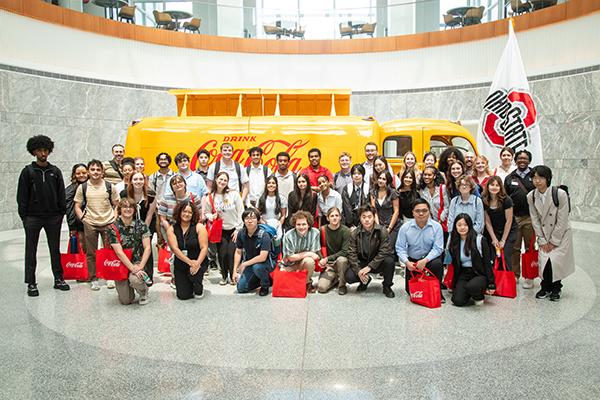
Creating impact with Career Trek
Summer break often means students are partaking in internships or work-based learning experiences, gaining valuable hands-on experience and skills that align with their career journey and goals, whether entering the workforce or continuing their education post-graduation.
One program providing students with worthwhile experiences this summer is the College of Arts & Sciences: Atlanta Career Trek. Organized by Andrew Freeman, Shirley Wu, and Zach Howman with the Career Success Studio, 41 students immersed themselves with site visits, networking, and Q&A sessions from top employers representing the business & technology, science, and art industries. Companies that participated include; Coca-Cola, Microsoft, Center of Disease Control (CDC), CNN, Warner Brothers Discover, Trilith Studios, and Alliance Theater.
Open to all majors and May graduates from the College of Arts & Sciences, students explored the city of Atlanta, an area many alumni are calling home and one of the fastest growing metropolitan areas in the United States. Students walked away with a sense of discovery, reflection, and confidence to take their next career steps.
Industry in focus
Top 5 Columbus startups to watch
Columbus continues to emerge as a high-growth startup ecosystem, with newly funded companies actively hiring and scaling. For career services teams, these organizations represent immediate opportunities for student employment, internships, and experiential learning.
Below are five startups to watch, selected for their growth potential and representation across key industries.
1. Path Robotics (Advanced Manufacturing / AI)
A leader in autonomous robotic welding, Path Robotics is transforming advanced manufacturing through AI-driven automation.
Why it matters:
- Strong alignment with engineering, computer science, and operations talent
- Represents Ohio’s growing advanced manufacturing sector
2. Redi.Health (HealthTech)
Redi.Health focuses on improving patient experience and healthcare navigation through digital tools.
Why it matters:
- Growing demand for health + tech hybrid skills
- Opportunities for students in public health, data, UX, and communications
3. HubiFi (FinTech / Data & SaaS)
HubiFi helps companies automate financial reporting and revenue recognition using data-driven platforms.
Why it matters:
- High demand for business analytics, accounting, and data talent
- Reflects expansion of FinTech and SaaS roles beyond traditional tech hubs
4. Flashpass (EdTech)
Flashpass develops tools focused on education management and student engagement.
Why it matters:
- Career pathways in education innovation and product design
- Potential partnerships aligned with learning and student success initiatives
5. AndHealth (Healthcare Innovation)
AndHealth is focused on transforming care delivery models through technology-enabled healthcare services.
Why it matters:
- Connects students to high-growth healthcare systems innovation
- Opportunities span clinical-adjacent roles, operations, and strategy
For career services professionals, these startups reflect a broader shift taking place across the Columbus economy. Growth is occurring simultaneously across healthcare, technology, fintech, and advanced manufacturing, with many companies expanding rapidly after securing funding and seeking adaptable, cross-functional early talent to support that growth. Unlike traditional employers, startups operate with greater flexibility, offering project-based work, shorter-term engagements, and opportunities for students to contribute meaningfully almost immediately.
As a result, startups are no longer “emerging”, they are actively shaping regional hiring demand and redefining how early talent engages with the workforce. Integrating these employers into engagement strategies creates new avenues to expand internship access, diversify career pathways, and connect students to high-impact, real-world experiences earlier in their development. These are the organizations building what’s next and the opportunity is ensuring students are part of that momentum.
View complete list of funded Columbus startups
By the numbers
A summary of what Career Services has done this past academic year:
- 34,401 unique student log-ins to Handshake
- 474,576 submitted job applications
- 14,711 career coaching appointments
- 3,000+ career coaching appointments in September alone
- 883 Career Services hosted events
- 9,000+ student attendance at events
- 53,300+ student & employer connections (employer hosted event + carer fair attendance)
- 18,360 unique employers posting jobs
- 233,135 total job postings
- 45,720 total internship postings
- 81% of internship postings were paid
- 19% of internship postings were unpaid
Top industries: Healthcare, Manufacturing, Internet & Software, Construction, Higher Education, Non-Profit, K-12 Education, Government, Financial Services
How to get involved
Although the academic year ended, it’s never too early to think and plan ahead for the upcoming year. Help students with their career journey and assist top employers at the 2026 University-Wide Career & Internship Fair on Wednesday, September 16 at the Ohio Union.
This career fair brings together over 150 employers representing various industries and sectors, and over 2,000 students representing a wide variety of majors and academic ranks.
Volunteers play an integral role in ensuring the fair runs smoothly and successfully for students and enhance the campus experience for employers. A wide variety of shift times and roles are available, and lunch will be provided for those who volunteer all day as a thank you for your commitment and energy.
If interested, sign up below by August 31 and block your calendar. Contact Tara Nord.29 if you have any questions.